Buyer guide
EN-71 for Kids Cosmetics: What It Covers and What Retailers Ask For
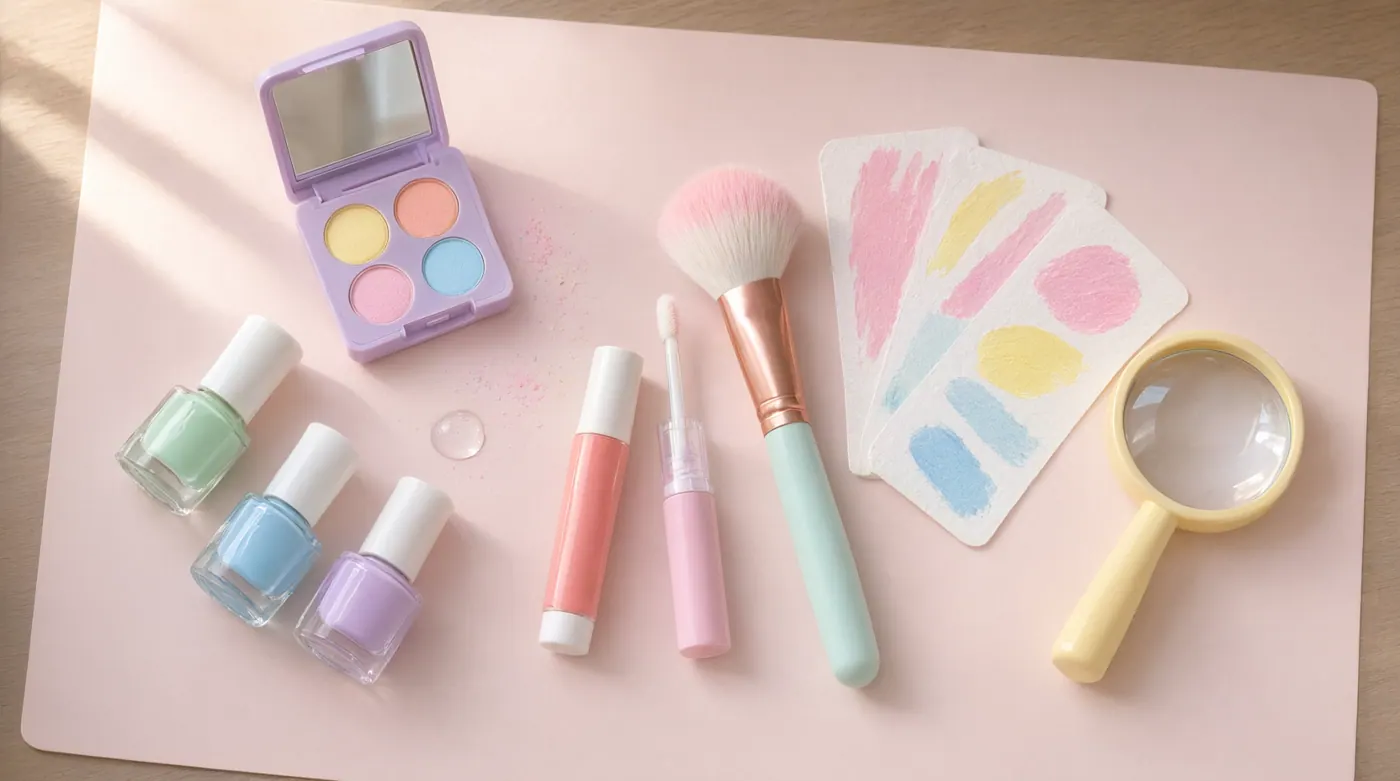
EN71 cosmetics questions land in your inbox the same way every time. Short email. Capitals. Three weeks before the goods ship: "Please send the EN-71 report."
You know the product cold — a palette, two lip glosses, a bottle of peel-off nail polish. Does it really need toy paperwork? Sometimes. How you sell it decides.
By law, kids makeup is a cosmetic. By use, it's a plaything — just watch a six-year-old. That double identity is why EN-71 keeps showing up in files that are otherwise pure cosmetics admin. Mix the two up and your launch slips. Keep them apart and the file turns boring. Boring? That's exactly what you want.
EN-71 for Kids Cosmetics: What It Covers and What Retailers Ask For
First, what is EN-71? The European toy safety standard. Its focus is the physical side of play. Small parts. Sharp edges. Points that snap off in a small hand. Flammability. How much of certain elements can migrate out of materials a child might put in their mouth.
Now look at what it leaves out. Nothing about preservatives. Nothing about allergens or skin sensitisation. Different rulebook.
EN-71 kids makeup programmes still land in scope because of how the product behaves on a shelf. It's bought as a gift. It sits next to dolls, not next to foundation. Kids play with it instead of wearing it for eight hours. Toy buyers apply toy rules to whatever they order.
The European Commission's toy safety pages spell out the frame: products intended for play by children under 14 must meet essential safety requirements, and CE marking is the manufacturer's declaration that they do. Present your set as play makeup — a dress-up kit, a "my first makeup" case with a mirror and stickers — and expect a buyer to ask for a CE-marked toy file on top of the cosmetic one.
Here's where people trip. You can't CE-mark a lip gloss. The marking belongs to the toy. The cosmetic inside the box still has to satisfy cosmetic law, with its own safety report, its own labelling, its own responsible person. Two regimes. One product.
Which one leads? Intended use and presentation decide — age grading, claims, packaging, the shelf it lands on. Confirm that with your test lab and your safety assessor. Not with a supplier's quotation.
Two files, not one
Under Regulation (EC) No 1223/2009, a cosmetic sold in the EU needs a responsible person, a product information file, a cosmetic product safety report signed by a qualified assessor, and notification before it goes on sale. Ingredients have to stay inside the permitted lists. Labels? They need the right warnings, a batch code, and either a period-after-opening or best-before date.
EN-71 gives you none of that. Toy file, not a toxicology file.
Great Britain runs cosmetics on its own track again. The GOV.UK guidance walks through the UK responsible person and the notification route. Selling into both markets? Build for both from day one. Adding a UK responsible person after artwork approval costs real money.
So ask your factory two blunt questions. Who writes the cosmetic safety report? Who holds the toy technical file? If the answers stay vague, keep looking.
The documents retailers actually ask for
Every retail programme has its own vendor checklist. They never match. On toy safety kids cosmetics lines, these come up most often.
| Document | Who issues it | What your buyer checks |
|---|---|---|
| EN-71 test report | Accredited third-party lab | Scope and age grading. Does the sample description match the SKU you ship? |
| CE declaration of conformity and toy technical file | Toy manufacturer or importer | Signed and current. Covers the toy elements in the pack. |
| Cosmetic product safety report | Qualified safety assessor | Formula, child exposure, warnings. |
| Product information file | Responsible person | Complete, and retrievable when asked. |
| Batch CoA plus heavy-metal and micro results | Factory or third-party lab | Batch number must tie back to the cartons. |
| GMPC / ISO 22716 | Certification body | Valid dates. Site address matches the factory. |
| REACH statement | Factory | Restricted substances, plus raw material declarations. |
| Social audit (SMETA / BSCI) | Audit body | Current report for vendor onboarding. |
| Artwork and label proof | Factory and brand | INCI list, warnings, age marking, batch code, PAO. |
| Stability and compatibility report | Factory | Shelf-life claim and pack interaction. |
| Allergen declaration | Factory | EU allergen labelling on the cosmetic. |
Two points about that table. A report only helps when the sample description matches what you ship — same formula, same colours, same components. A report for a three-shade palette won't automatically cover your eight-shade version. And certificates are site-level things. GMPC and ISO 22716 show a buyer how the factory is run. They tell you nothing about whether your strawberry lip gloss passes EN-71.
CE kids makeup: what the claim actually means
Search "CE kids makeup" and you'll see suppliers waving CE certification around like a lab hands it out with the report.
It doesn't work that way.
CE marking is a declaration. Nothing more. The manufacturer or importer states the toy meets the applicable requirements. A technical file backs that up, with testing where required. Nobody issues a CE certificate for a lip gloss.
Ask for three things. The declaration. The technical file behind it. The test reports that support it. A supplier who can't produce all three quickly has just told you something useful. Believe it.
How Magic Color supports the file
We've made colour cosmetics since 2008, and kids and teen makeup is now a core part of what leaves our plant in Jinhua. Kids items are produced to EN-71 and CE requirements, with skin irritation testing and oral non-toxicity testing on the formulas that need it. Our peel-off water-based nail polish shows where formulation and safety meet: water-based film, roughly eight minutes to dry, no remover. The kids nail polish page has more detail.
What we can put in your file:
- Third-party reports from SGS, Intertek or CTI. Per batch, on request. CNAS/CMA reports included.
- A COA for every raw material, filed by batch.
- Internal physical, chemical, microbial and heavy-metal testing.
- Stability, compatibility, light, drop and fit testing at sample stage.
- Site certificates: GMPC, ISO 22716, BRCGS, SMETA, BSCI, RSPO.
No talc, phthalates, formaldehyde or heavy metals in the formulas. Every raw material carries a REACH number. Our regulatory team tracks EU, UK, US and other market requirements. For the US we work to FDA and MoCRA requirements — a different conversation from CE. The safety and compliance page has the full detail.
Capacity matters here too. A compliance file is worthless if the goods arrive late. We run more than 30 automated production lines today, and all filling workshops in our current Jinhua factory are Class 100,000 GMPC cleanrooms. A new facility of about 100,000 m² with 45 lines is due to open in 2027.
One thing buyers misunderstand about traceability: retained samples don't ship. Ours stay at the plant in a constant temperature and humidity room, filed by production batch. Batch samples are retained until six months after the end of the product's shelf life, so there's a reference point when a question comes back. What travels with your order is paperwork — the batch CoA, inspection records, and the third-party report for that batch.
Questions to put to your test lab
Labs are busy. Their quotation forms are short. Ask more than the form allows.
- Is my product a toy, a cosmetic, or both under the rules of the market I'm selling into?
- What age grading are we testing to, and does my artwork agree with it?
- Which properties does the lab propose to cover, and why those?
- Which sample should be submitted — the darkest shade, the glitter version, the one with the most pigment?
- What labelling and warnings must appear on pack and instructions?
- What triggers a re-test: formula change, new component supplier, new colour, new factory?
Get the scope in writing before samples ship. A report with the wrong scope is worse than no report. It looks like compliance until somebody's QA reads page two.
Timelines, MOQ, and the cost of getting this wrong
Practical numbers from our side. Samples take 3–7 days and cost nothing; you cover freight, and two revisions are free. Formula development runs 14 days standard, 7 days express. Production is 45 days standard, 30 days express. MOQ is 6,000 pcs on basic models, 12,000 where special processes are involved. For sets, standard processes start at 3,000 sets; special processes start at 6,000 sets. Price breaks come at 12k, 30k, 50k and 100k.
All of it collapses if the compliance file lands after the goods. A re-test triggered by a late artwork change will cost you more than the unit price you fought over. In kids makeup, the file is the product. That matters more than a cent or two off the piece price.
Before you sign the purchase order
- Confirm who the responsible person is for each market, and get it in writing
- Match the lab report scope to the exact SKU, colours and components you're buying
- Check that age grading on pack, report and marketing copy agree
- Keep the toy file and the cosmetic file separate — different reviewers want different pages
- Ask for the batch CoA and test report before shipment, not after arrival
Building a kids range and want to talk through what the file will need? Our wholesale team can walk you through it. There's background on teen and tween makeup and on kids-safe washable makeup kits. Send your market, age group and target price through the contact page. We'll tell you honestly what's achievable.
FAQ
Is EN-71 mandatory for kids makeup sold in the EU?
That depends on how you present and use the product. Sell a set as a toy or play product for children? EU toy safety rules apply. EN-71 testing is the normal way to show conformity. The cosmetic inside the pack still has to meet Regulation (EC) No 1223/2009. Before you book anything, get classification and scope confirmed in writing by your test lab and your safety assessor.
Does a CE mark replace the cosmetic safety report?
No. CE marking is a declaration that the toy elements meet the applicable requirements. The cosmetic still needs its own product information file, a cosmetic product safety report signed by a qualified assessor, a responsible person and correct labelling. Two separate files. Most retailers ask for both.
What documents should I ask a kids makeup supplier for?
Start with the EN-71 test report and the CE declaration or toy technical file. Then ask for the cosmetic product safety report, batch CoA, heavy-metal and microbial results, GMPC or ISO 22716 certificates, a REACH statement, the artwork proof and the stability report. Match every report to the exact SKU, colours and components you buy.
How often should a kids makeup item be re-tested?
Ask your lab. It depends on the product and the market. As a rule, plan a re-test when the formula changes, when a component or raw material supplier changes, when you add a colour, or when production moves to a different site. Your buyer may also write a refresh cycle into the vendor agreement.